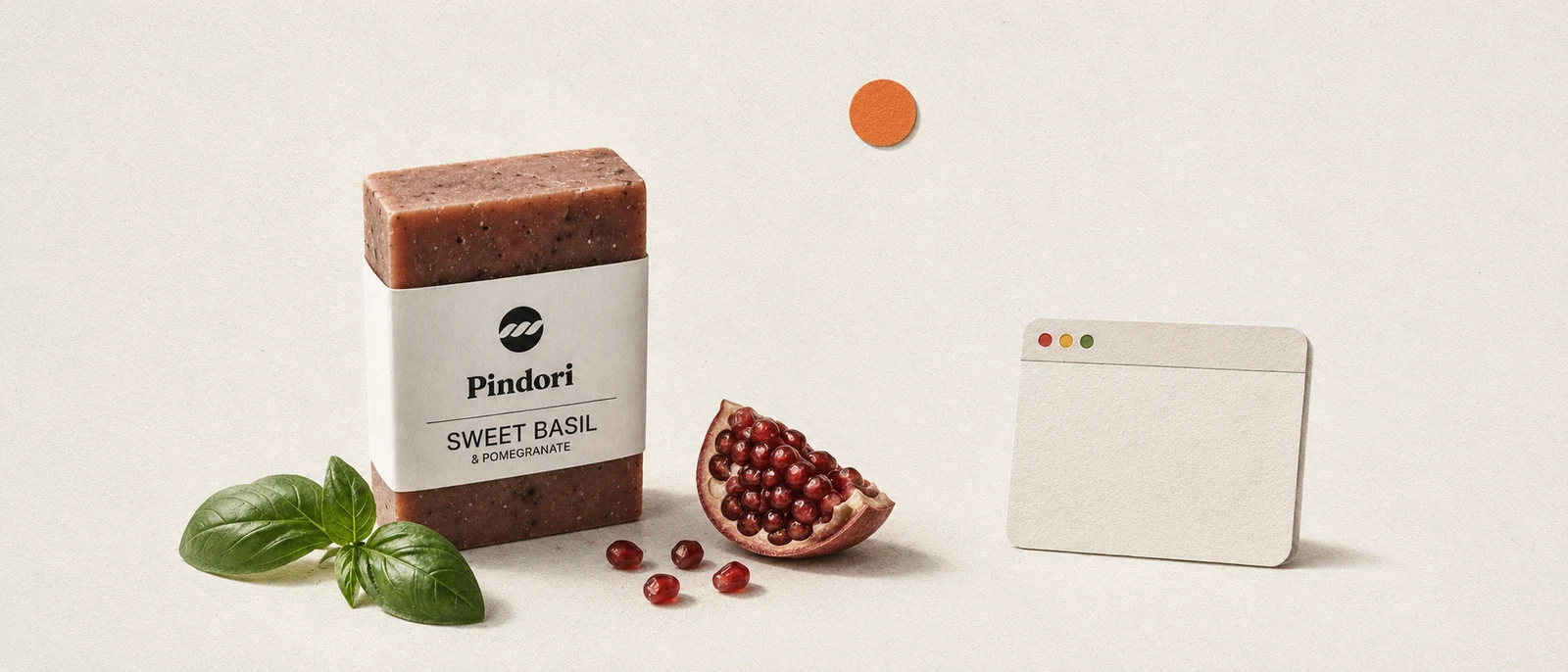

The founder asked for e-commerce. The right answer was smaller.
Pindori makes small-batch Ayurvedic care: fifty-four products that already existed and already carried their certifications. The founder came asking for a full online store. What I brought back, after several honest discussions, was a different proposal: a premium presence that sells in conversation, built lean enough to go live in weeks and learn from the market. I took it end to end through Studio Kunj, strategy to shipped site to the ongoing work of growing the business around it.
What you'll see here
Live in production, gated until launch.
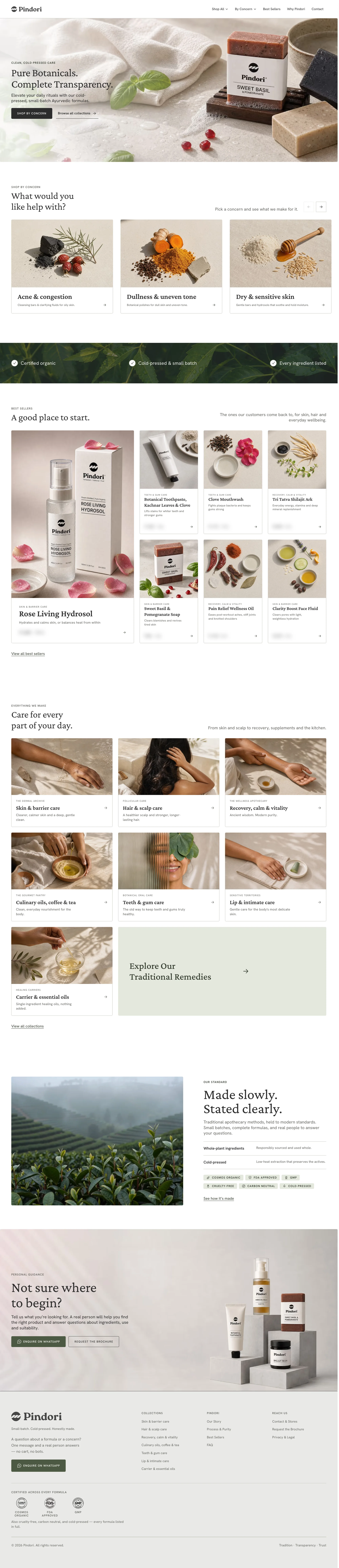
Pindori's site runs behind a password while the founder readies the launch, so there is no public link yet. What stays private: commercial terms, prices mid-rework, and the deeper screens. Everything else is here, the homepage in full, the working boards, the decisions. The rest I can walk you through in a room.
The ask
A full store was the ask. The operations were still catching up to the range.
The first conversation was about an e-commerce site: catalogue, cart, checkout, the whole machine. I understood the ask. A founder with a finished range wants it selling. But when we laid the business on the table, a different picture formed. The products were real, certified and named. The packaging was still being decided. Most of the range had never been photographed. And there was no team yet to pick, pack, ship and answer for an online order the way this brand would need to.
There was a second problem, and it mattered more. Pindori is a premium brand, and the person it serves does not buy a jar of Himalayan resin the way they buy a phone case. They ask questions first. Wellness is personal, and the founder sells face to face in his own stores, where his instinct is to let people touch, smell and talk before they choose. An anonymous cart would have thrown away the one thing this brand already did well.
The proposal
Not e-commerce. A presence that sells in conversation.
So I went back with a different proposal, and we argued it through properly, over several sittings. Not a store: a browsing presence, every claim checked, every enquiry landing in WhatsApp as a conversation the founder can actually hold, and the money going into the brand's face rather than machinery it could not run yet. The founder pushed on it, asked the hard questions, and then agreed. From there we worked closely, and my job stayed the same the whole way: advocate for the person on the other side of the screen while respecting what the business could carry.
A full store, day one.
Real products. Packaging in flux. Most never photographed.
Spend on the brand's face, not the machinery.
Weeks from kickoff to a site in production.
Commerce gets added when volume earns it.
The decisions
A cart is a promise the operations could not keep yet.
There is no cart, no account, no payment flow. Every product ends in a WhatsApp enquiry that carries the product's context with it, because a conversation is how this founder actually sells, and a checkout is an operations commitment a young company should make once, properly. The trade-off is real and named: no instant payment, and some buyers will not message. The cart gets built when order volume justifies the machinery behind it.
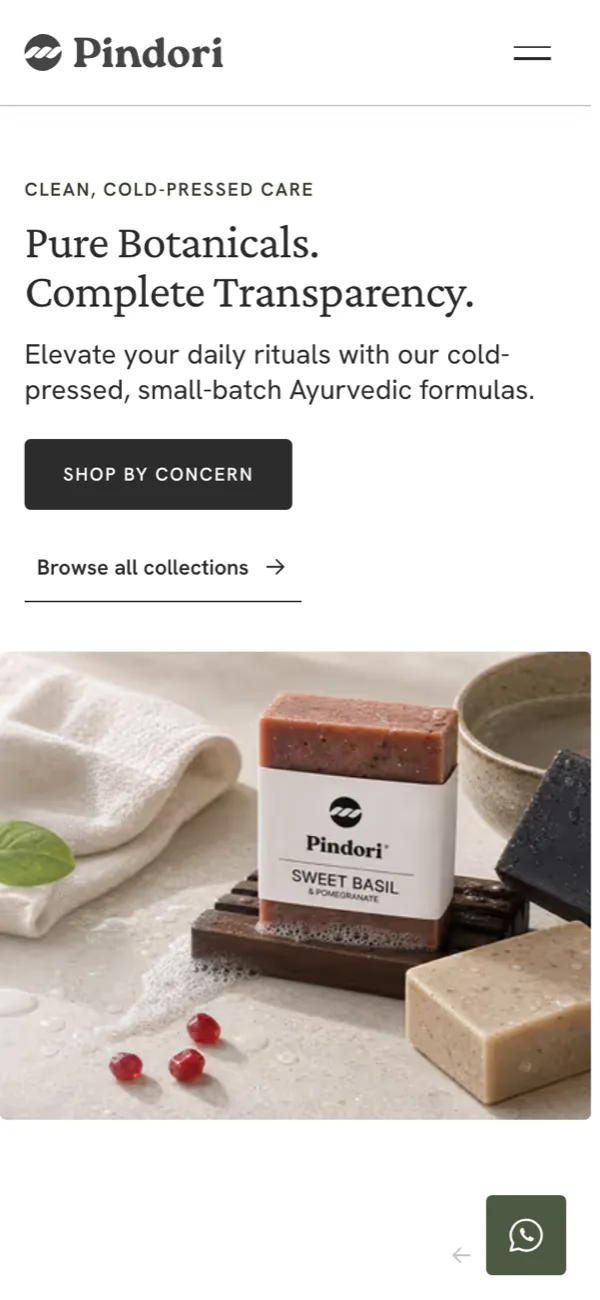
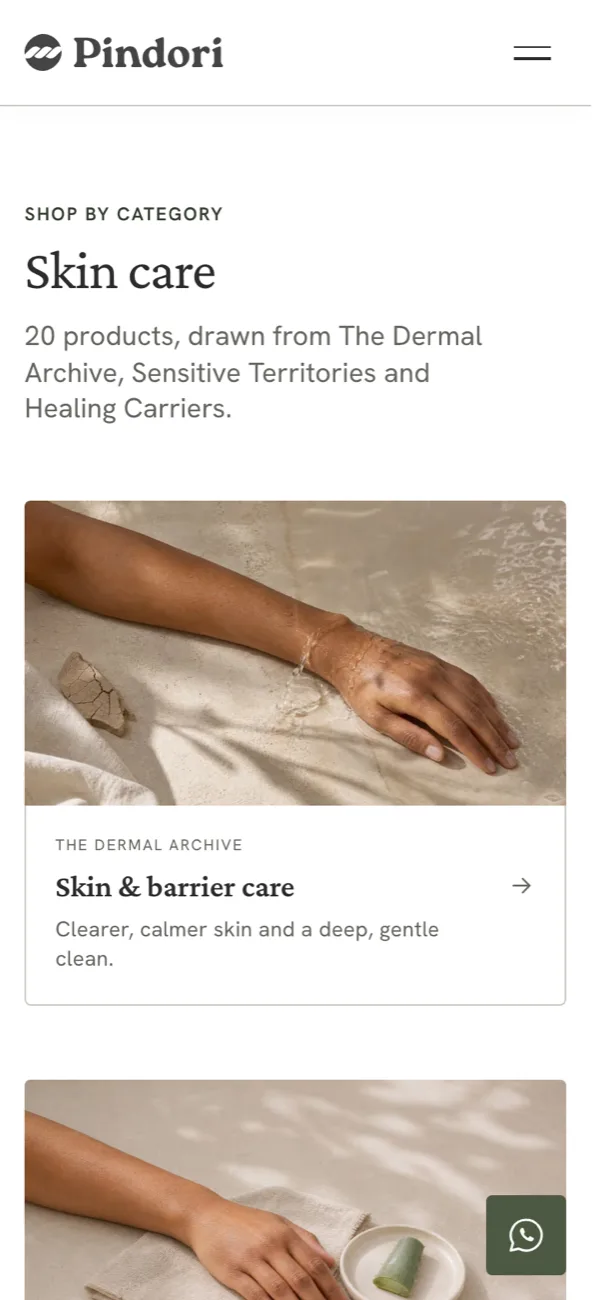
The site can only say what the brand can prove.
The category leans on claims that are hard to verify, and Pindori's actual strength is the opposite: traceable sourcing and the discipline to say only what it can back. So every price, caution and certification on the site comes from one checked source. Editing is allowed to make a sentence clearer, never to make a claim stronger. And where the founder's answers are still pending, the page says so, visibly, instead of inventing something confident. Restraint reads premium because it is rare.
Built lean, so shipping was never the hard part.
The site is deliberately simple underneath: no cart machinery, no accounts, nothing that needs a team to babysit it. That is what made live-in-weeks possible, and it is what keeps every future step open. The founder runs the whole surface from his phone.
The visual world
The mood came first. The rules came second.
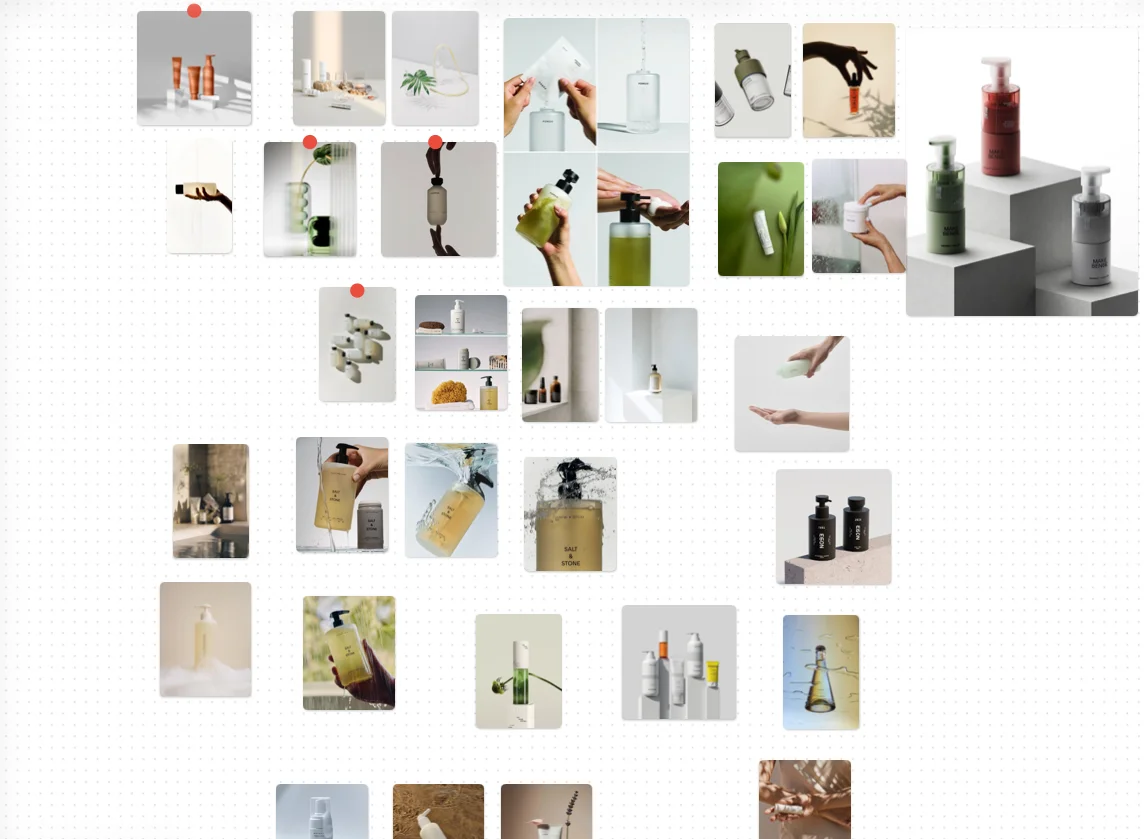
Fifty-four products and almost no photographs to show them. Before touching a screen, I did what I do before a shoot: sat with references and worked out what the light should feel like. The board below is where the product mood was established, and every image on the site inherits from it.
A board sets a feeling. It cannot settle an argument. So the mood was written up into a direction document, and instead of one look I proposed three, each with rules an image could be judged against. The founder picked one. The other two were not discarded. They live inside it.
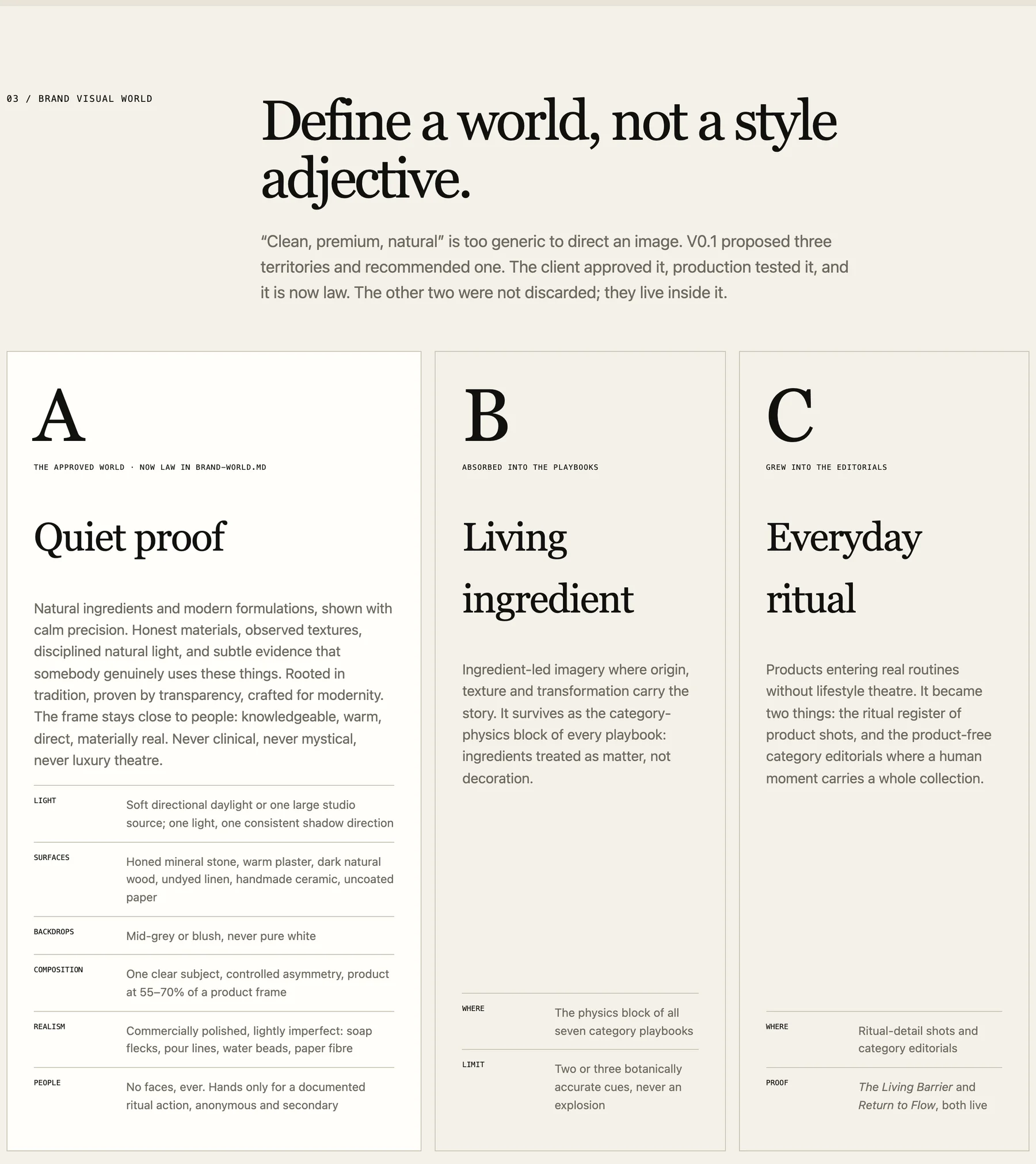
Honest about being made.
There was no product photography to work with, and no sense in commissioning a shoot for a range still in packaging. So the imagery is generated, and every frame earns its way out through the same check: my photography background directs the light, material and composition. The real shoot is already briefed, product by product.
What the product really is: vessel, label, physical form.
One light, honest materials, no theatre.
Identity, label, form, realism, crop, claim.
Each frame retires when its real photograph lands.
One check, every frame, the whole range
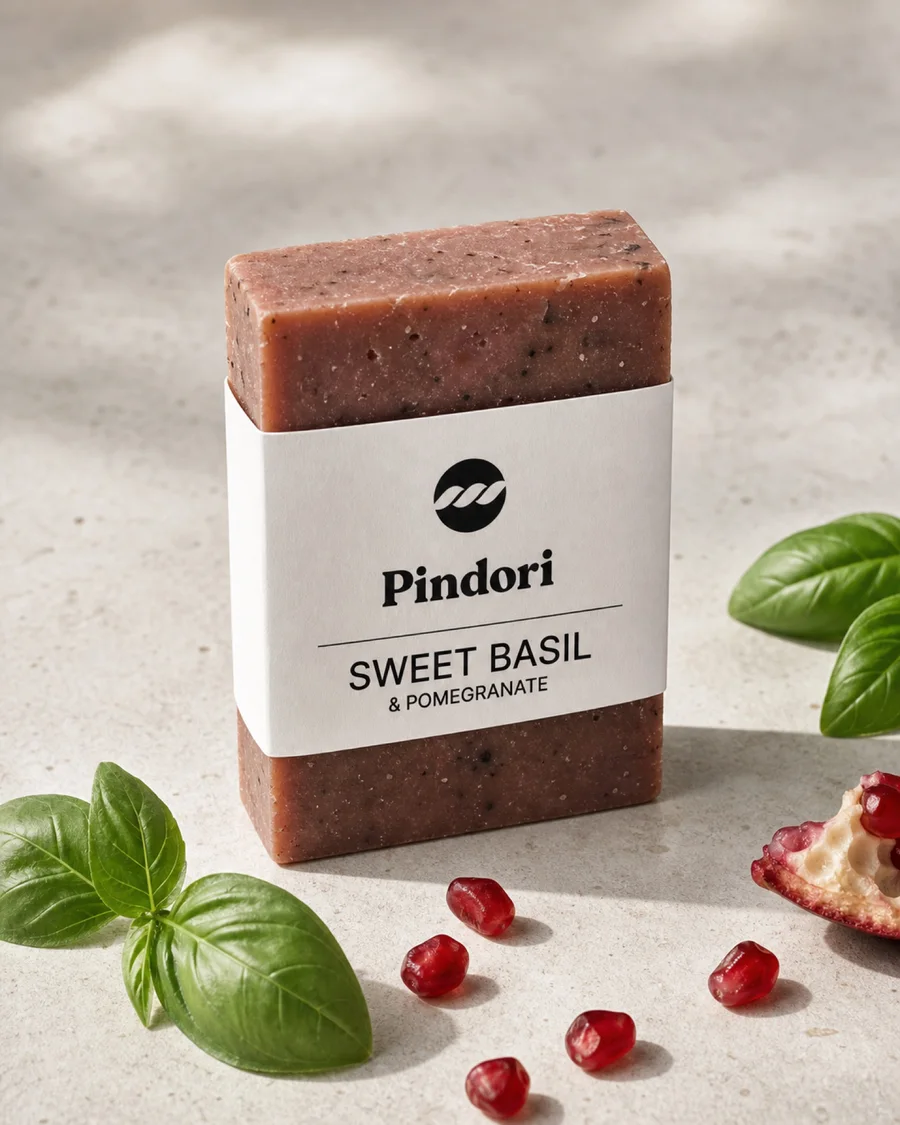
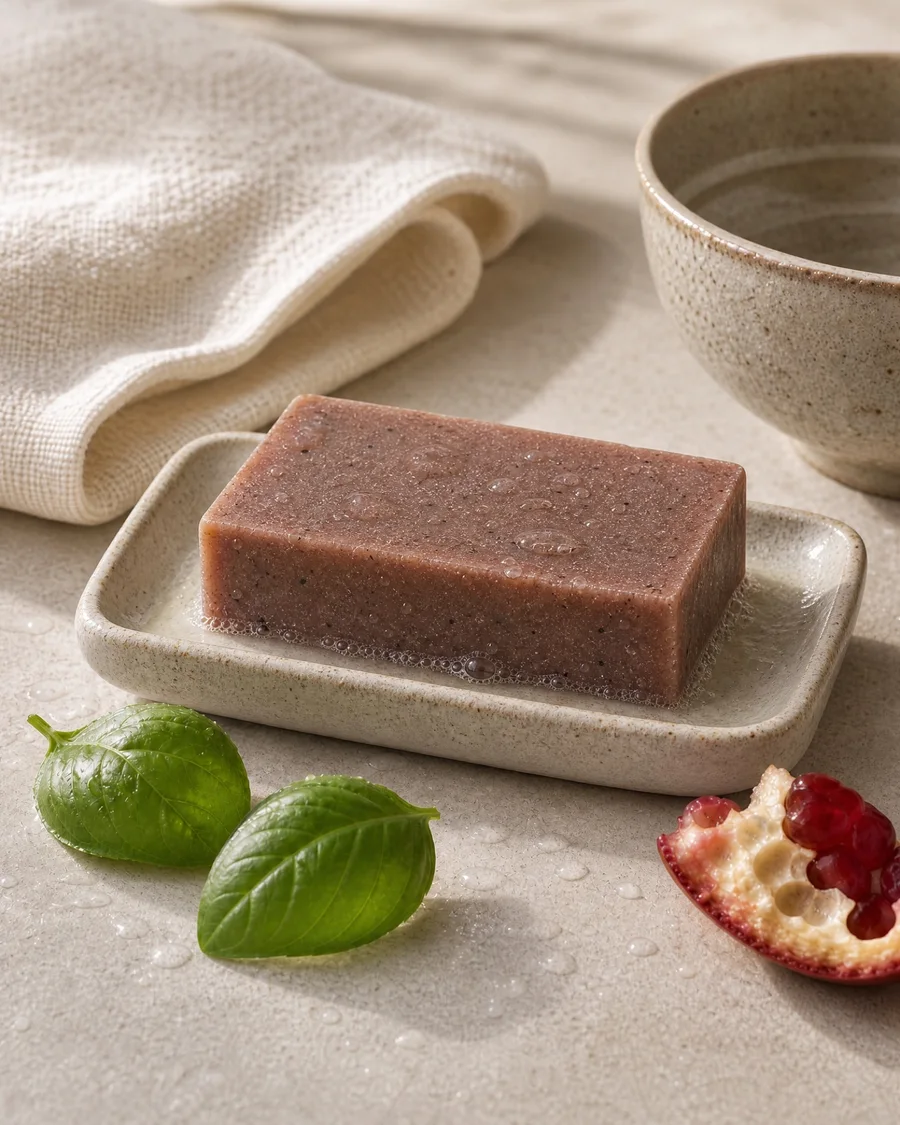
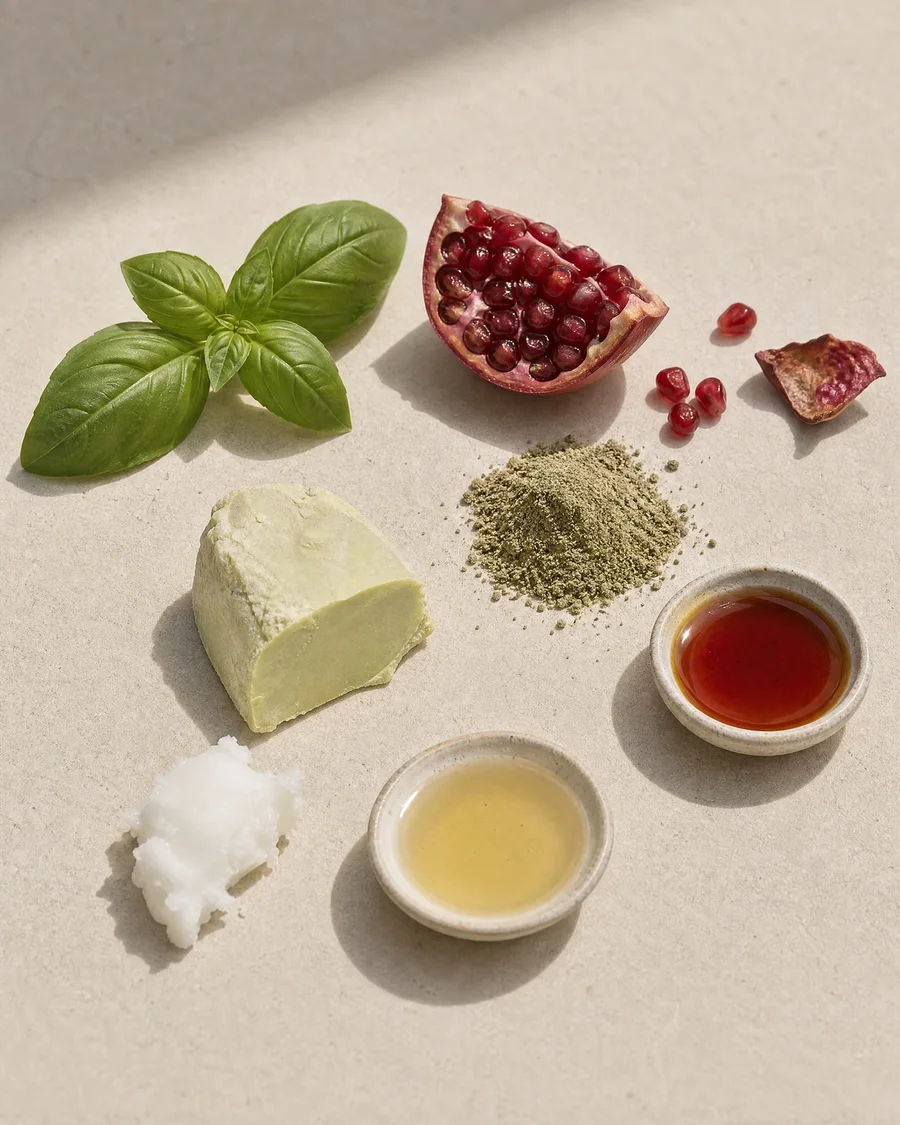
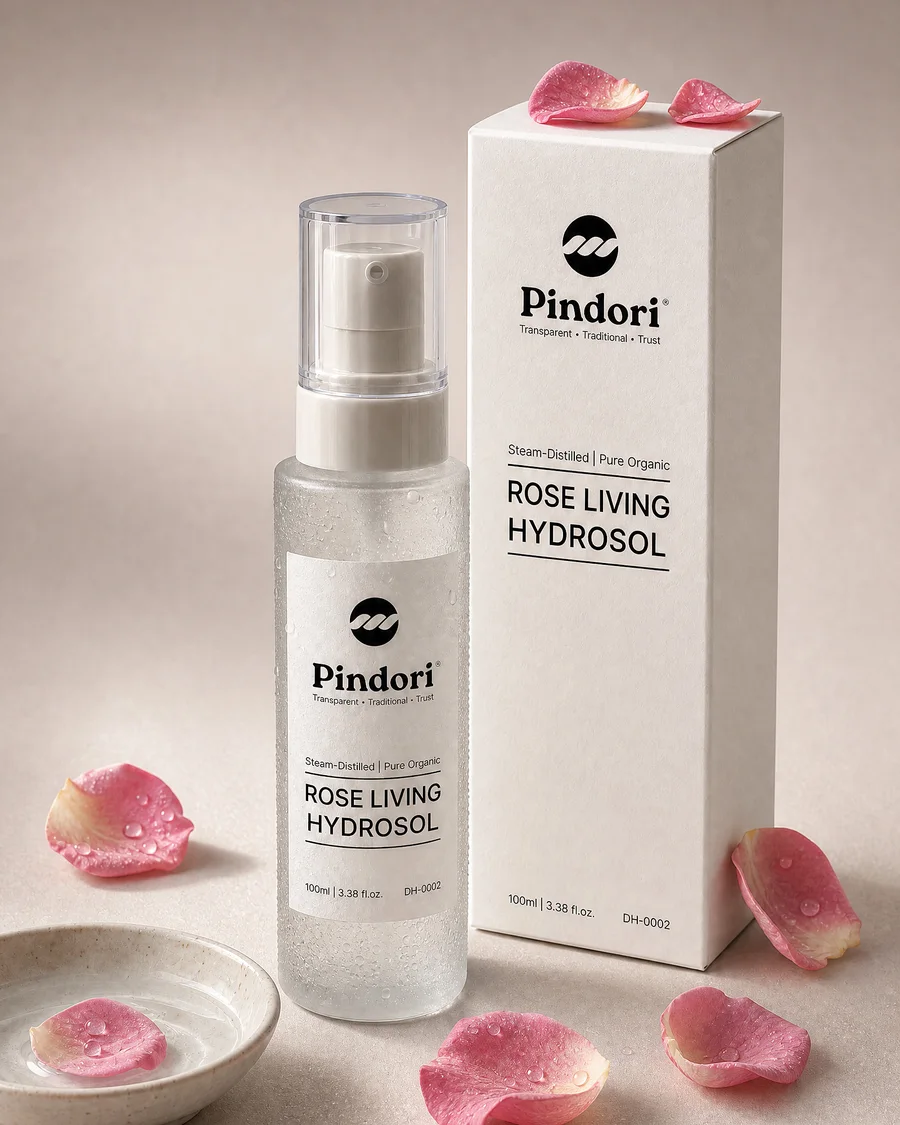
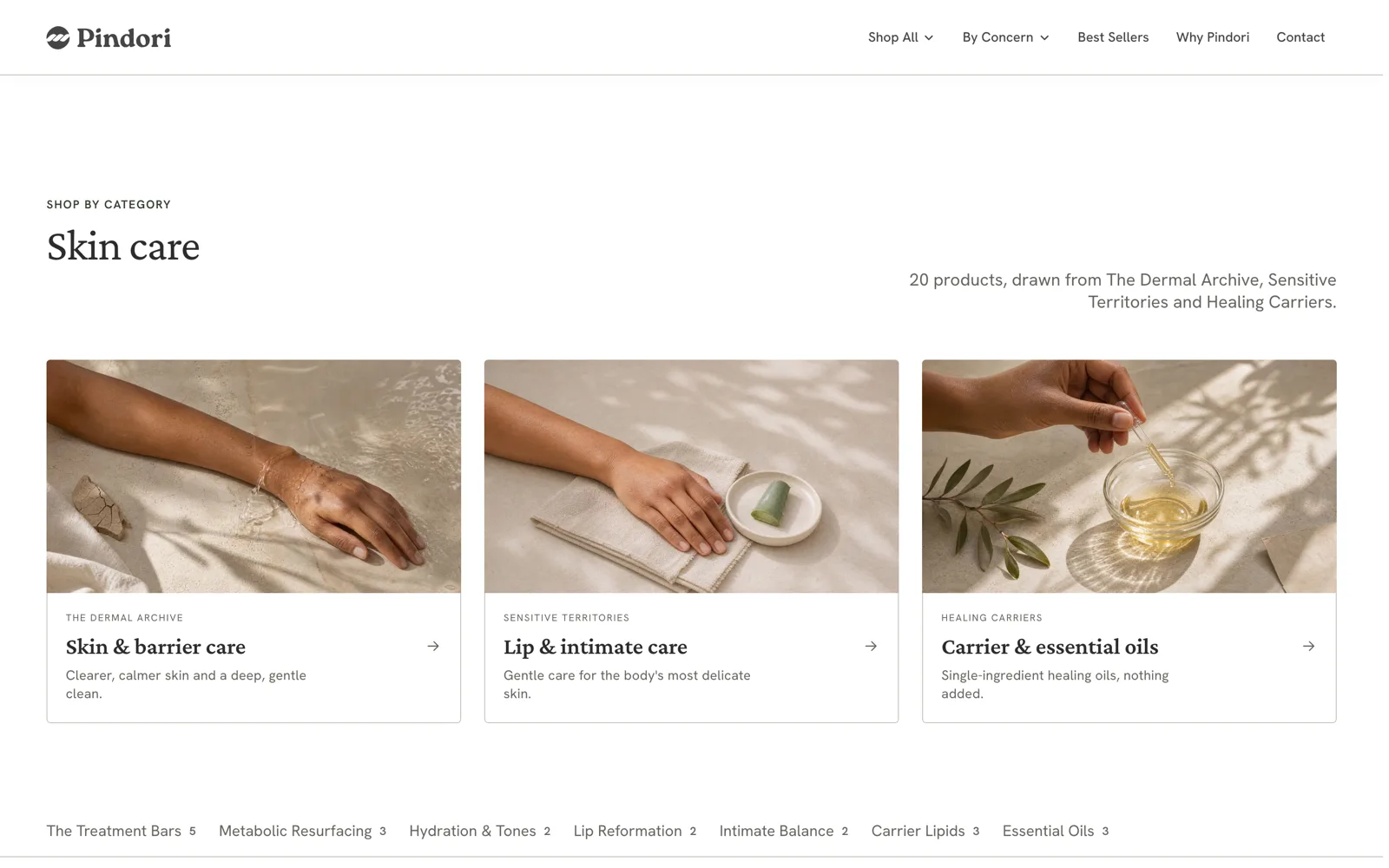
Here is how it comes out, on two products from the range. Each product gets the same three tellings: the packshot, the ritual, and the ingredients it is made from. Same stone, same light, same restraint, which is what lets the whole range read as one family.

Canvas to production
Iterate on the canvas. Ship the quiet one.
The design language went through the same discipline on a working canvas: hero directions side by side, two treatments of the concern section, product cards tested against real names and real cautions. The louder versions kept losing, because the territory kept saying no.
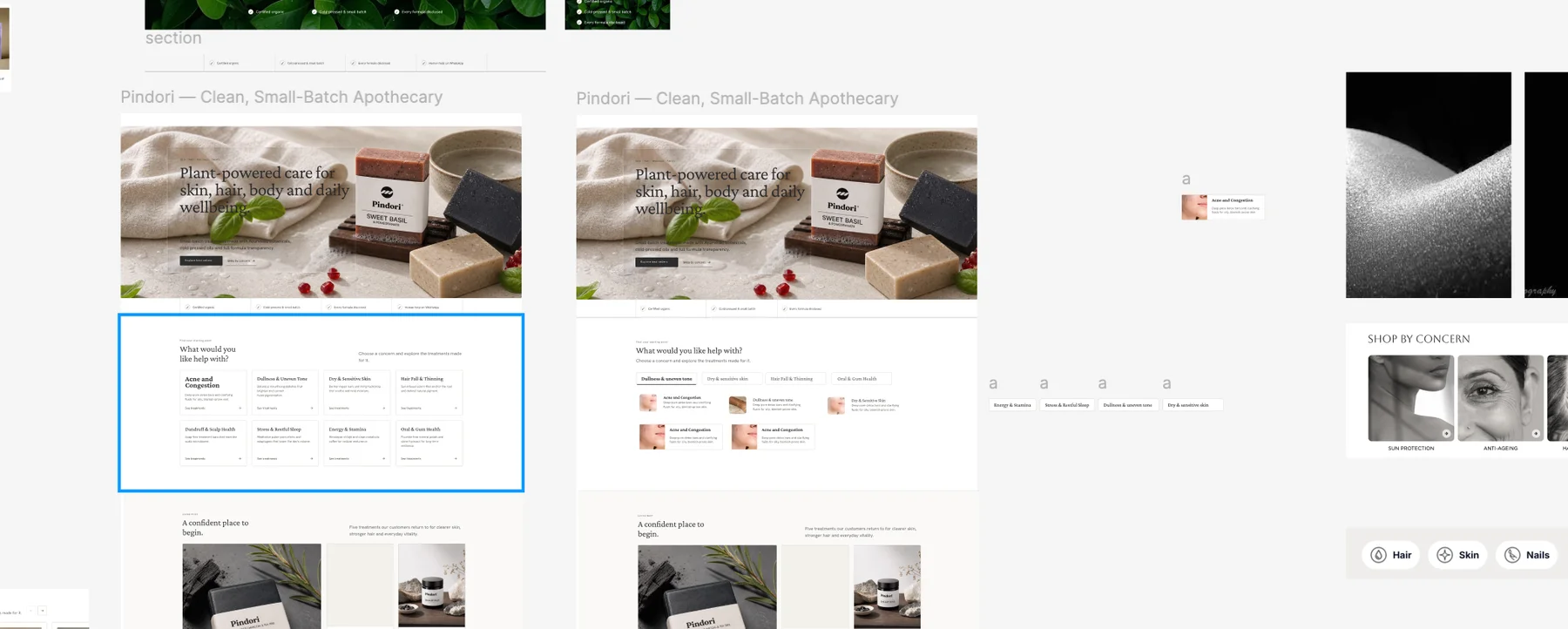
What shipped is quiet: warm white, a serif that carries the brand's voice, a plain grotesk that does the reading, one sage accent, hairline rules instead of shadows. In a category that shouts, the site lowers its voice and lets the material speak. Precision, light and matter carry the desirability. Nothing else has to.
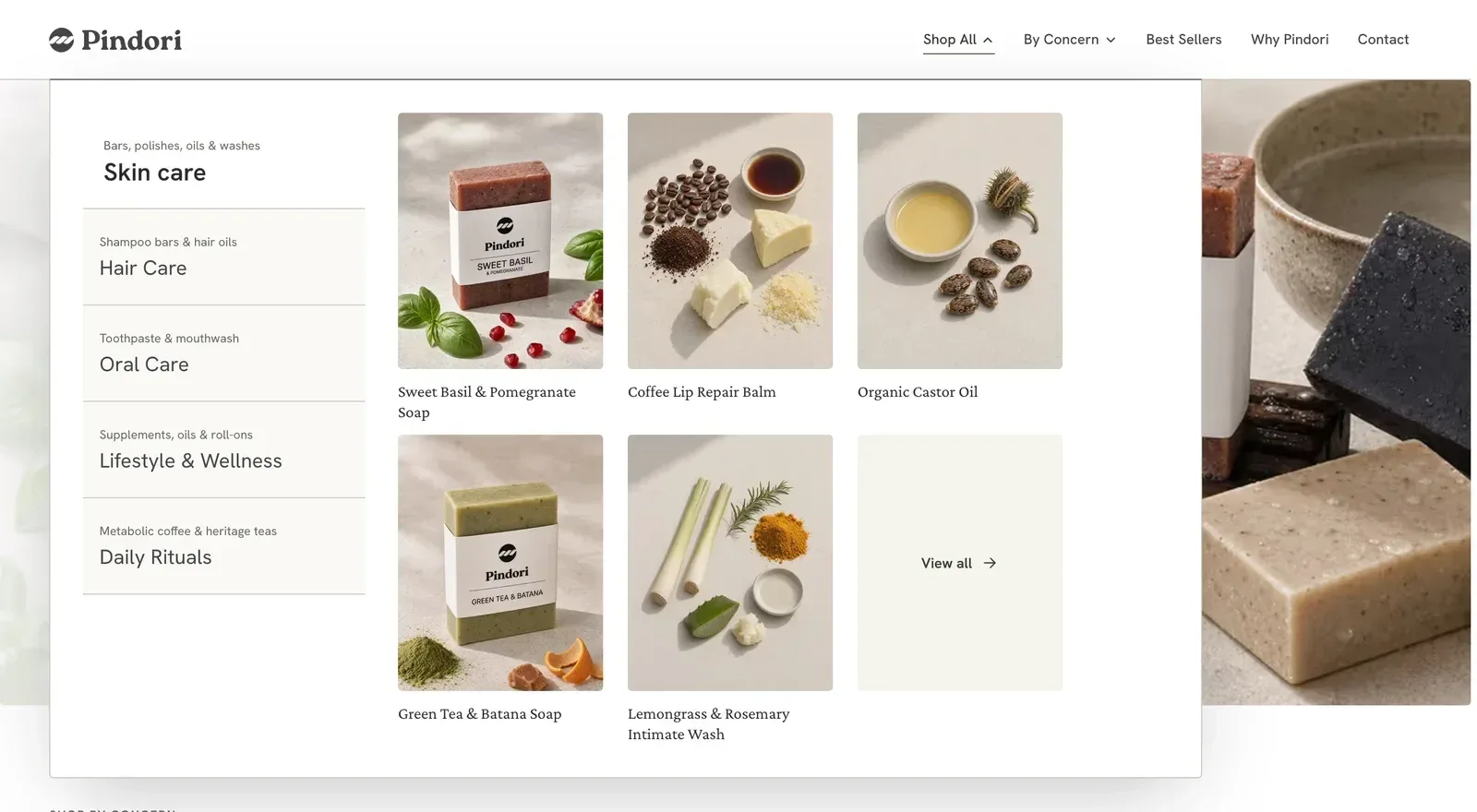
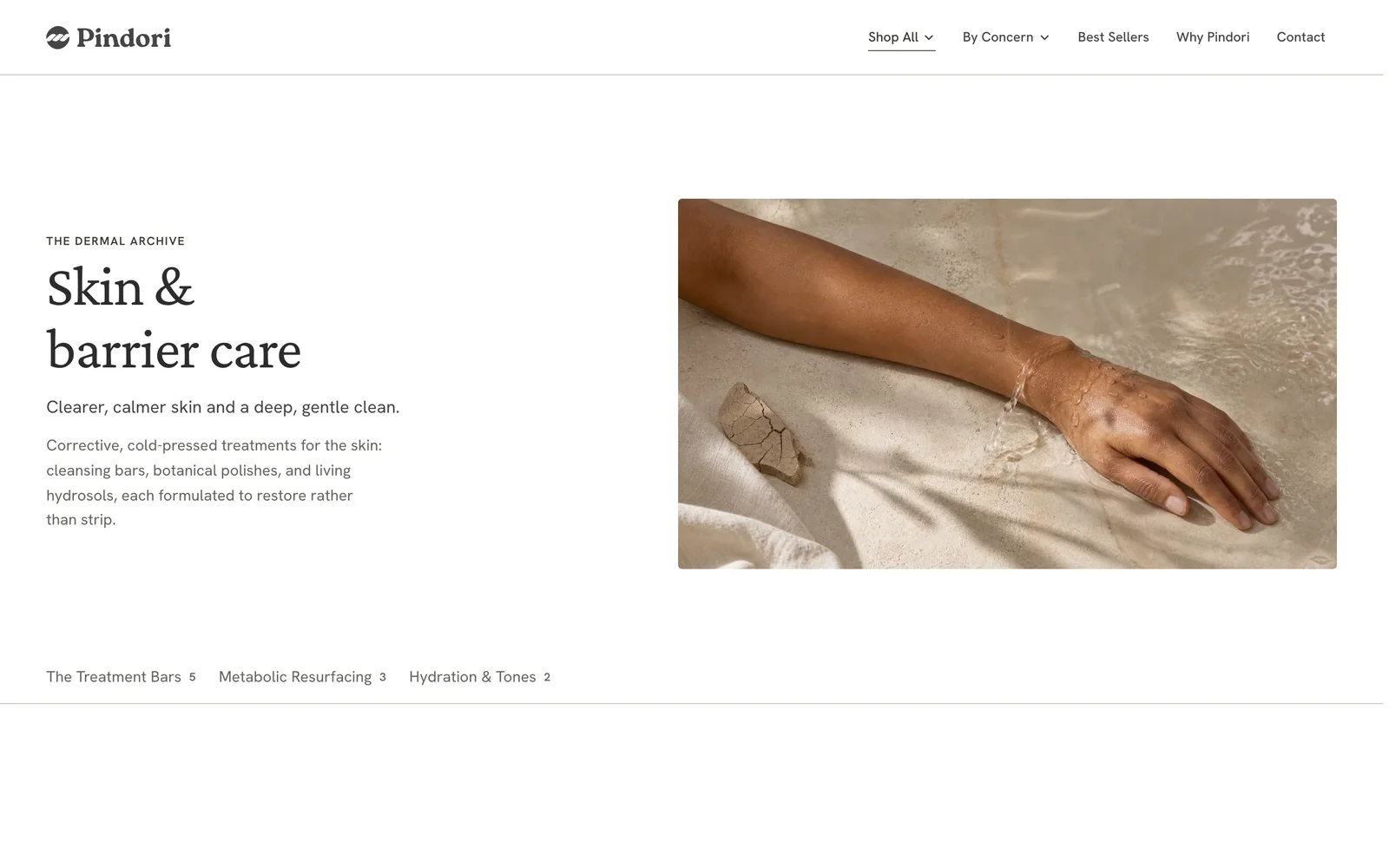
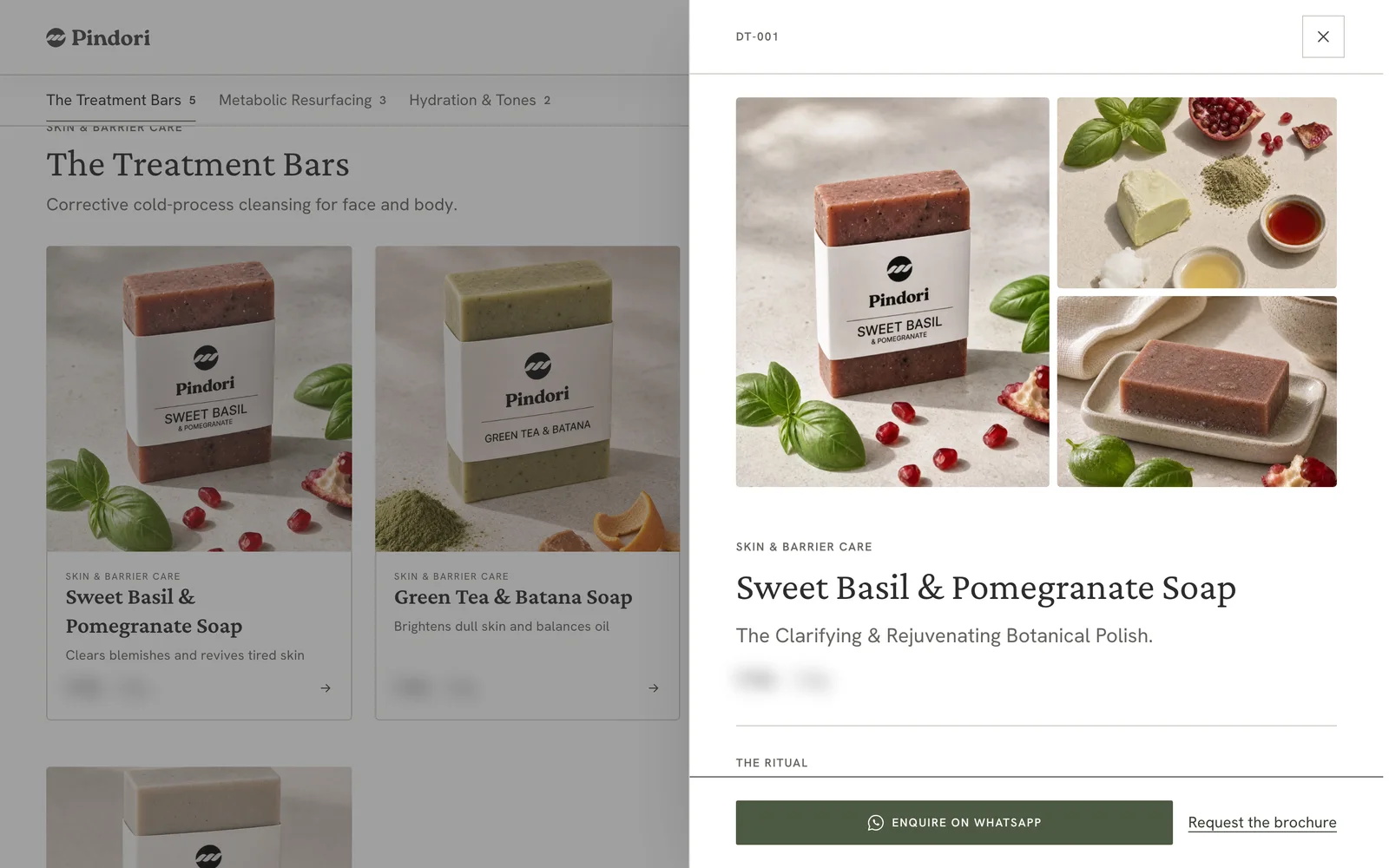
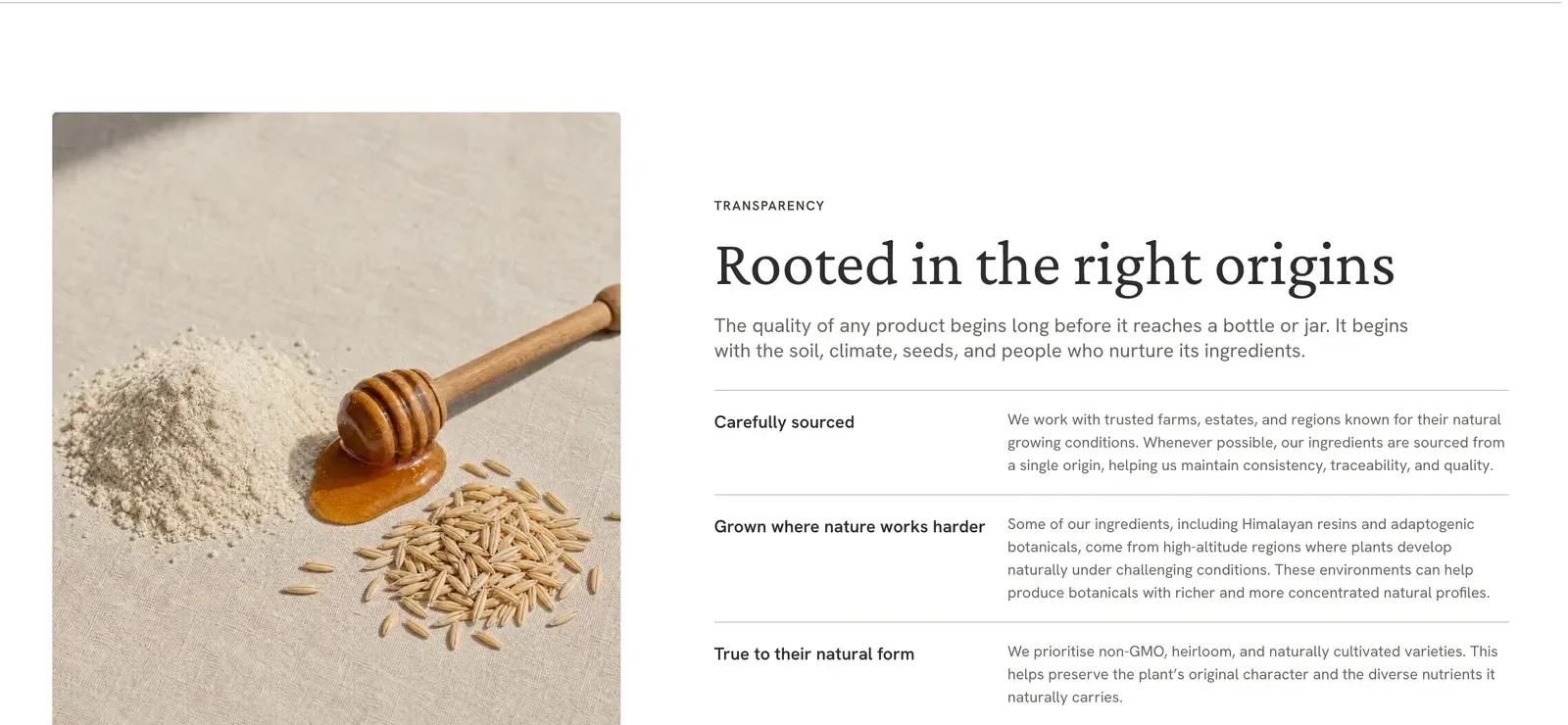
Deeper screens stay behind the gate until launch
Still in the making
Live is not the same as launched. Here is what moves next.
The engagement did not end at ship, and was never meant to. This is the part of client work that rarely makes a portfolio: the unglamorous weekly help while a young business finds its feet.
What I take from it
The most valuable thing I made was the smaller plan.
It would have been easy to take the brief and build the store. Talking a founder out of his own brief takes more listening than talking, and it only works if every counter-argument stands on the customer. The judgment is the work.
Role and credit: an independent client engagement through Studio Kunj, 2026 and ongoing. Strategy, design, build and art direction by me. The products, the formulations and the founding story are the founder's. Commercial terms stay private.
Ask AI about this case Live
Answers come from what this case actually says. Pick a lens, ask as many as you like.
Summarize this case
1. Pindori makes small-batch Ayurvedic care: 54 real, certified products across seven collections. The founder came asking for a full e-commerce site.
2. After several discussions I proposed the smaller honest version: a premium presence that sells in conversation on WhatsApp, built lean enough to go live in weeks and learn from the market before buying the machinery of a store. He agreed, and I took it end to end through Studio Kunj: strategy, positioning, the visual world, the build.
3. With 47 of 54 products unphotographed and packaging still in flux, the imagery was generated under an approved art direction (three territories proposed, one chosen), checked against a truth file per product. It is never called photography; the real shoot is briefed.
4. The site is live in production behind a password ahead of launch, and the engagement continues: catalogue rework, social strategy, and connecting the founder with the right partners. Commercial terms stay private.