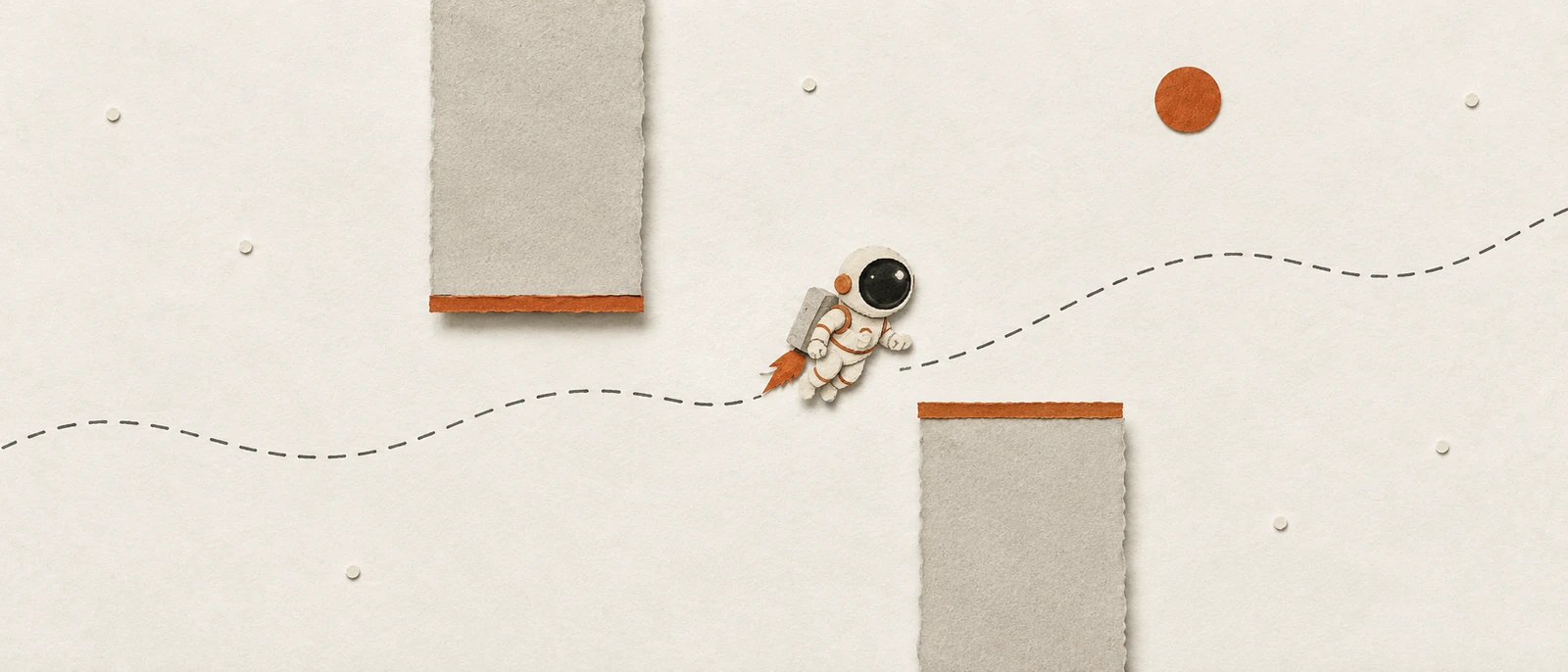
Designing for the thrill of the near miss.
SkyGlider is a one-touch arcade game: hold to climb, release to fall, thread the gap between the gates. It is small on purpose. A game this simple has nowhere to hide, so all of it is feel, the feedback, and the pull to try one more time.

Why it started
A brief I wrote for myself.
Most of my product work wins by disappearing: a search that asks the right question, a tool that stays out of the way. Feel is the opposite discipline, and that work never exercises it. So I wrote the kind of brief I would hand a designer, and held myself to it.
The problem statement
Design a game a stranger understands in three seconds and plays with one thumb. Every run ends in failure, so failure has to read as the player's own timing, never the game's cruelty. Success is not the download. Success is the second run.
- One input, nothing to read mid-run
- A run under a minute, the next one a single tap away
- Shipped complete to a public store, not left a prototype
The design problem
A one-touch game lives or dies on feel.
One control means one decision, over and over, under pressure. There are no difficulty menus or content to hide behind: failure has to land as fair, or the player blames the game and leaves; success has to land as earned, or it is worth nothing. None of that is content. It is timing, feedback and forgiveness, tuned by hand.
How I thought about it
Three moves that make a hard game feel kind.
Forgiveness as onboarding
The first runs let you bounce off a wall instead of dying, with a gentle hint. Once you have the idea, the safety net quietly drops. The game teaches by letting you survive your mistakes, not by explaining them.
The near miss is the reward
Squeak through a gap and the screen kicks, the combo climbs, and a focus meter slows time for a beat. The game pays you for risk, so a close call feels like the point, not a brush with failure.
Polish that respects the player
Haptics on the moments that matter, a reduced-motion toggle for players who need it, and an auto-pause that counts you back in, three, two, one. Care, even in an arcade game.
The game
Tap. Climb. Survive.
A glowing astronaut, scrolling gates, and a streak you do not want to break. The whole loop, from a gate threaded to a new personal best to one more try.
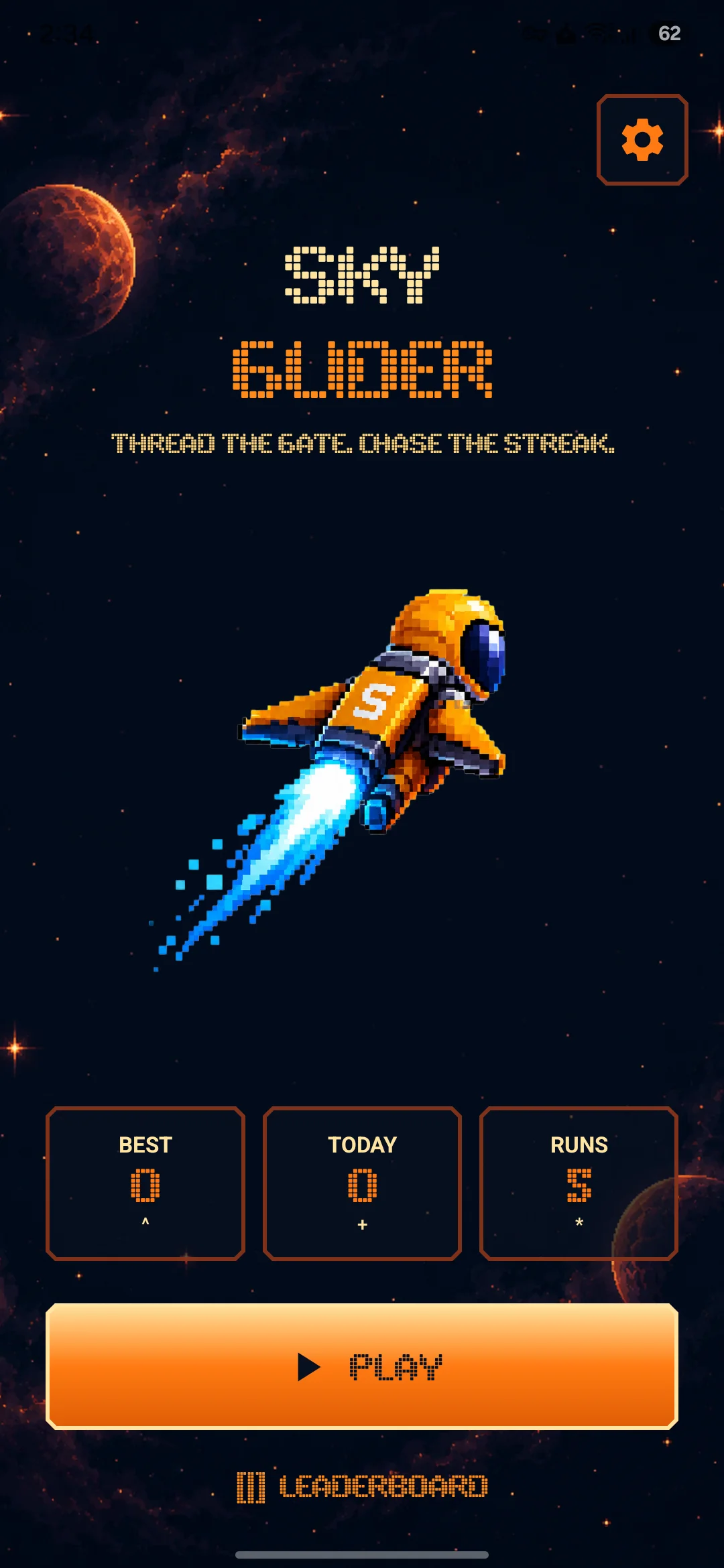
StartOne control, and a high score to beat.
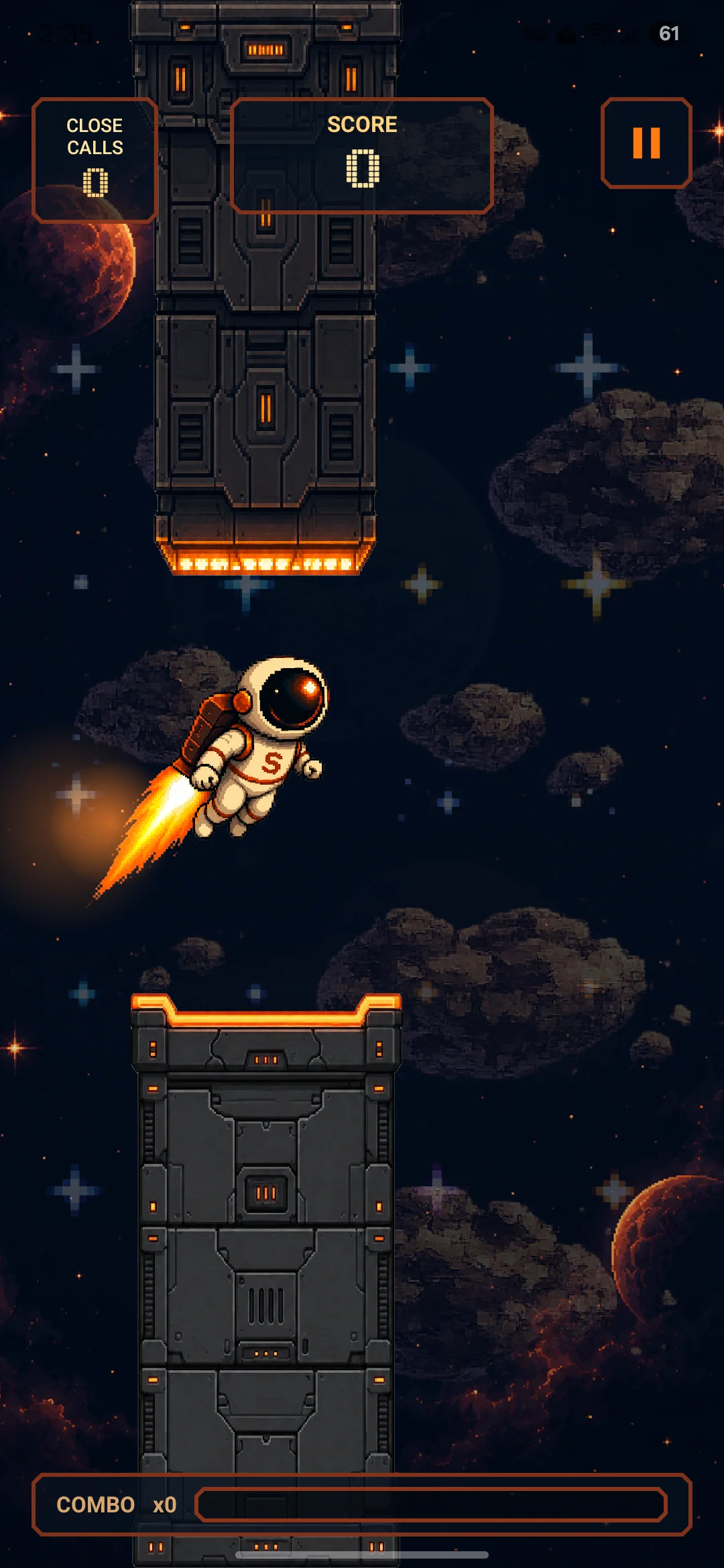
Thread the gateThe margin between the gates is the whole test.
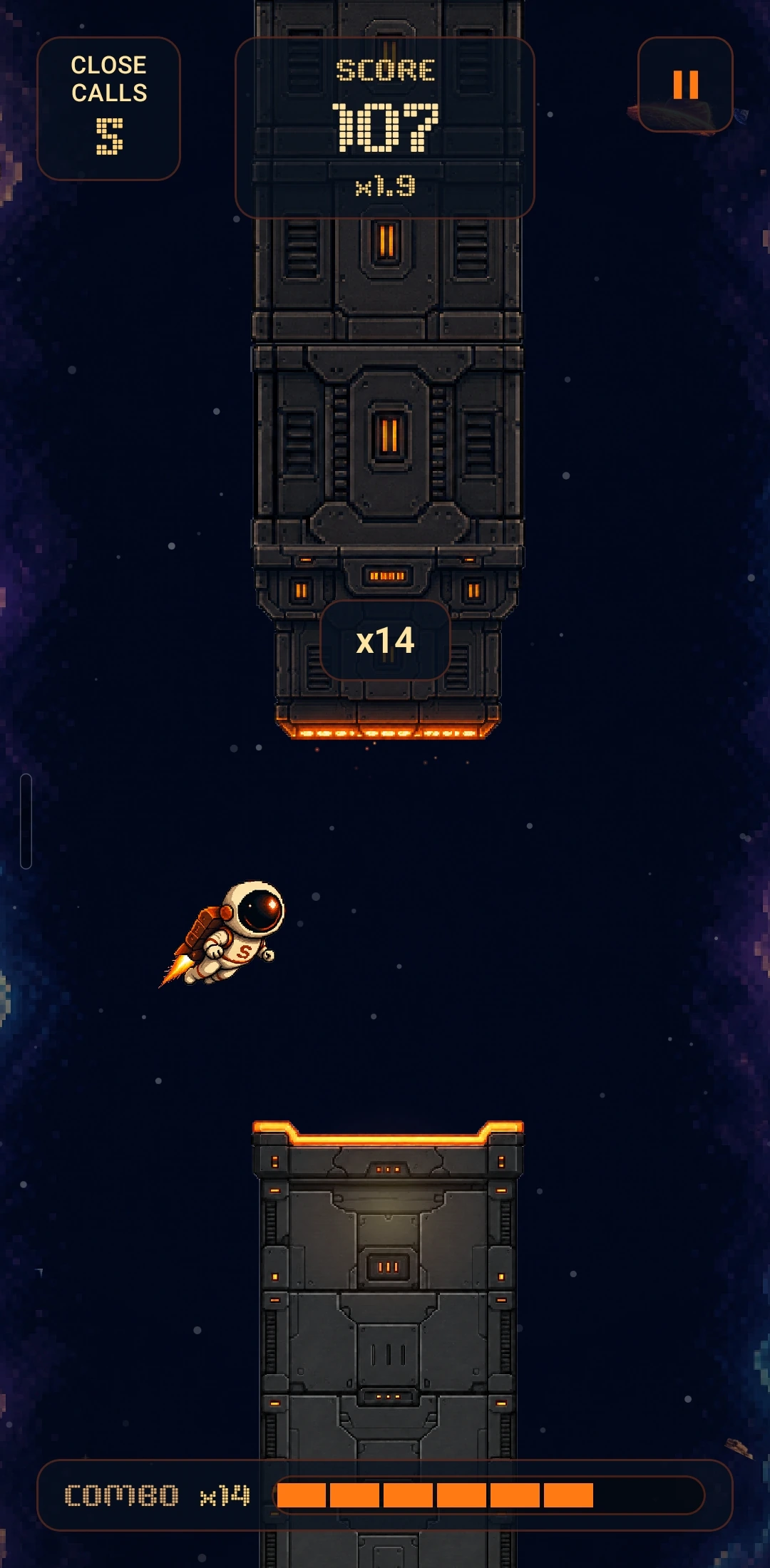
Build the comboClose calls stack into a streak, and the streak multiplies the score.
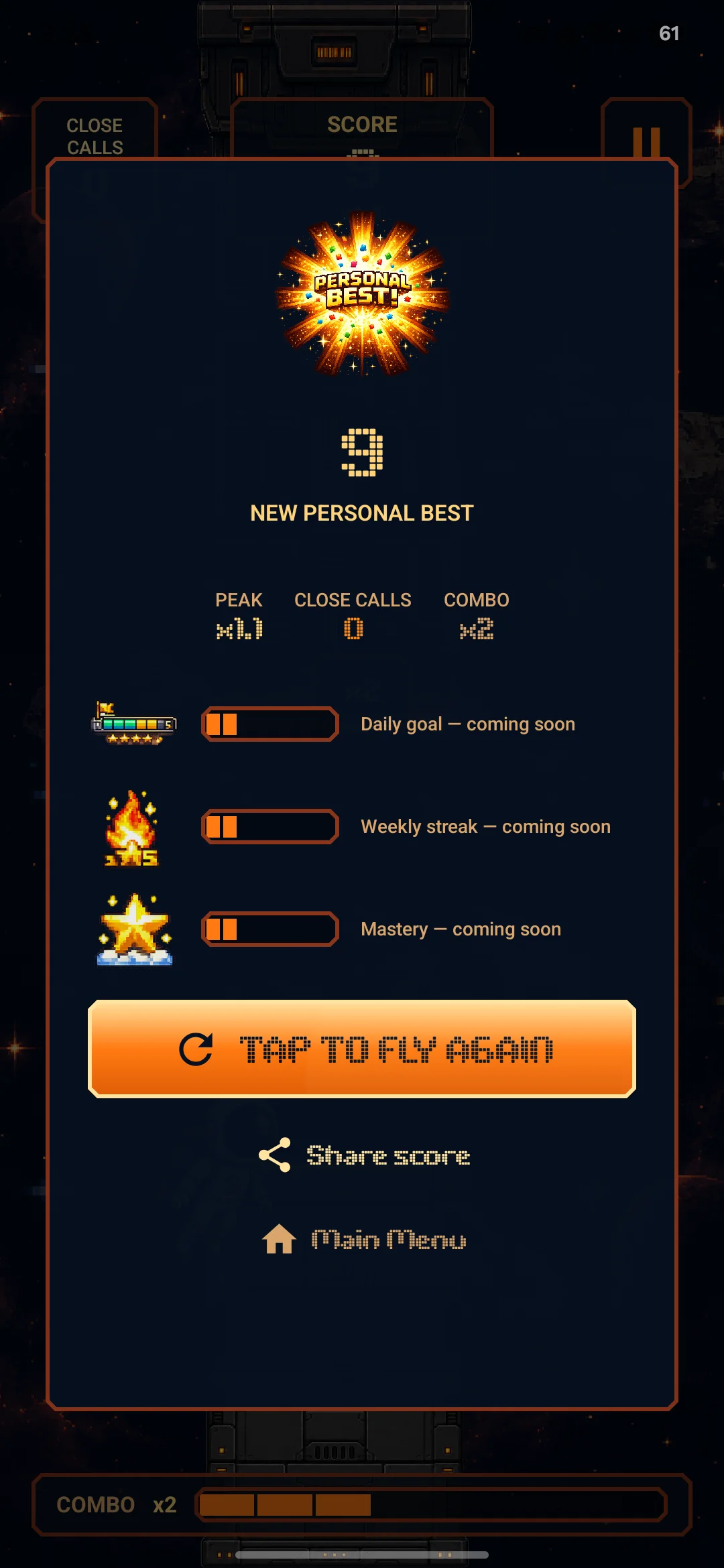
One more tryA new best, and the button that pulls you back in.
The economy
Designed to pay its own way.
The meta layer works for the same brief. Sparks, the in-game currency, come from playing: a seven-day login streak, daily missions, close calls survived. They buy artifacts and unlock levels, and a named weekly modifier (Needle's Eye: tighter gaps, slightly slower scroll) resets the challenge so the runs stay fresh.
The revenue design follows the failure design: nothing interrupts. No ad ever plays over a run. When a player wants sparks faster or the next unlock sooner, they choose to watch one, served through Google AdMob, so the game earns in proportion to the people who keep coming back. That is the whole model: a free game, funding itself quietly.
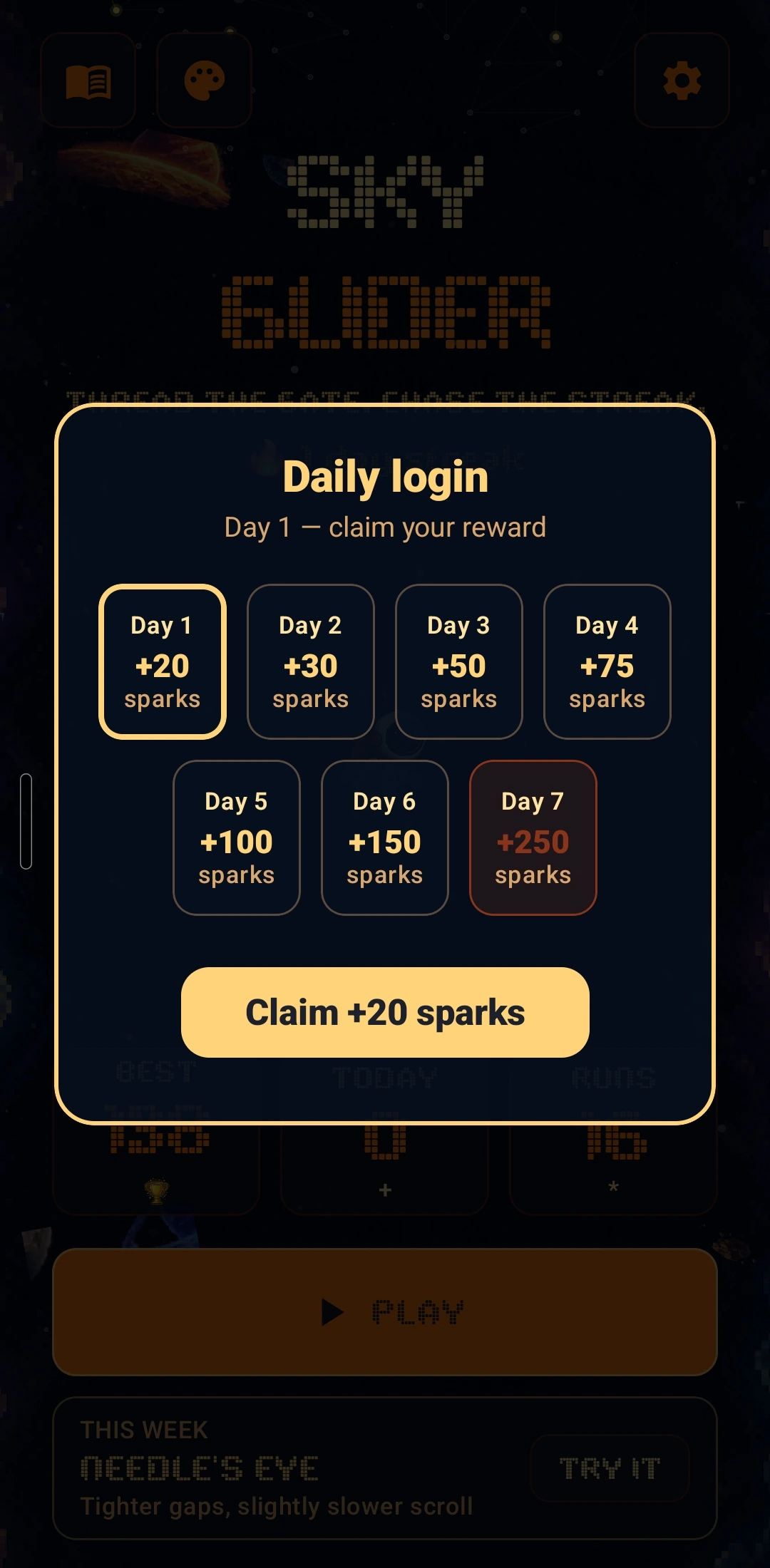
Come back tomorrowA login streak that pays in sparks, seven days deep.
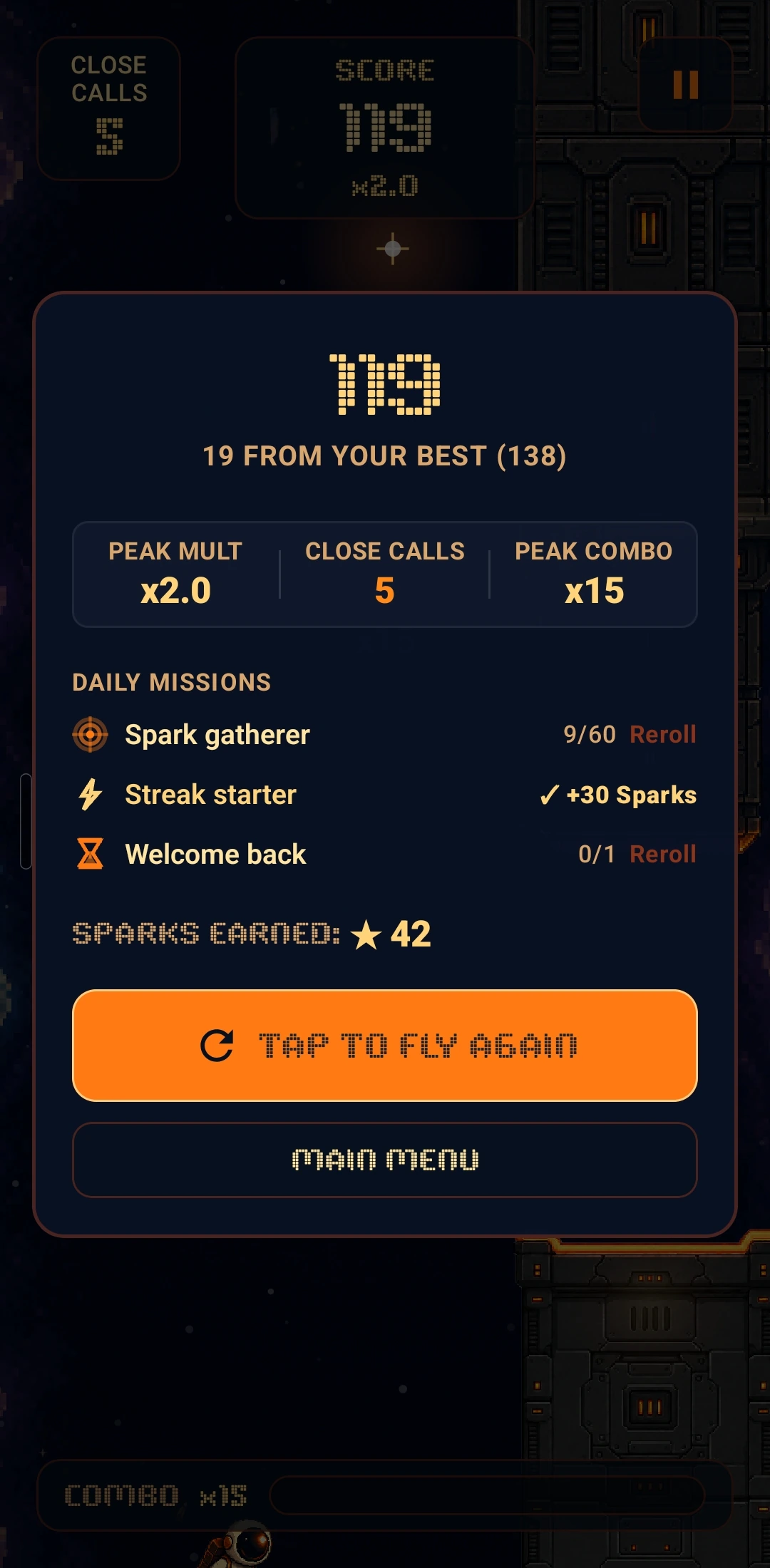
The debriefMissions, sparks earned, and the next run one tap away.
What this proves
A different muscle, shipped.
Feel asks for different instincts: the timing of a reward, the kindness of a failure, the small loop that brings a person back. SkyGlider is those instincts, live on a public store.
A small, early game with modest installs. The claim is range and craft, not scale.
What carries forward
Make failure feel fair, and people will try again.
The most useful thing this taught me has nothing to do with games. When a person fails at something you made, the design decides whether they blame themselves, the tool, or no one. Build in a little forgiveness, make the near miss feel like progress, and put the next attempt one tap away, and they keep going. Failure is a design surface, not an error state. That instinct is the part I carry back into everything else.
Role and credit: SkyGlider was designed, built, and shipped end to end by me under my independent label, Studio Kunj.
Ask AI about this case Live
Answers come from what this case actually says. Pick a lens, ask as many as you like.
Summarize this case
1. It began as a brief I wrote for myself: a game a stranger understands in three seconds and plays with one thumb, where success is not the download but the second run.
2. A one-touch game has only one control, so it lives or dies on feel: fair failure, earned success, and the pull to try again. I designed three moves for that: forgiveness as onboarding, the near miss as the reward, and polish that respects the player.
3. The economy pays the game's way without interrupting it: sparks earned by playing, daily missions and a weekly modifier for the comeback, and rewarded ads (Google AdMob) a player chooses to watch.
4. Designed, built and shipped solo to Google Play. A small game, so the claim is range and craft, not scale.